Articles
20
See more
Clarke
63 views
•
2026-06-14 14:00
In “Project Maven,” Katrina Manson shows us how close we are to artificial intelligence picking targets and dropping bombs without human input.
Clarke
58 views
•
2026-06-09 09:40
Claude’s constitution is a detailed description of Anthropic’s intentions for Claude’s values and behavior. It plays a crucial role in our training process, and its content directly shapes Claude’s behavior. It’s also the final authority on our vision for Claude, and our aim is for all of our other guidance and training to be consistent with it.
Clarke
52 views
•
2026-05-21 03:26
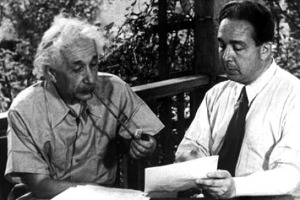
It prompted action by Roosevelt, which eventually resulted in the Manhattan Project, the development of the first atomic bombs, and the use of these bombs on the cities of Hiroshima and Nagasaki.
Clarke
63 views
•
2026-05-14 22:46
The US and China are engaged in a competition for strategic advantage in frontier technologies like AI. Four fronts of the competition:ntelligence、Domestic adoption、Global distribution、Resilience.

Clarke
55 views
•
2026-05-08 05:36
OpenAI is a non-profit artificial intelligence research company. Our goal is to advance digital intelligence in the way that is most likely to benefit humanity as a whole, unconstrained by a need to generate financial return.
Clarke
58 views
•
2026-04-26 16:59
Confronting and Overcoming the Risks of Powerful AI
_20260425140521.jpg&w=3840&q=80)
Clarke
70 views
•
2026-04-24 22:10
The story is set against the backdrop of a century-long Cold War stalemate. A secret agent arriving from Moscow warns the United States that the enemy has developed humanoid robots completely indistinguishable from humans. Ten of these robots have already infiltrated the United States, each carrying one component of a “Total Conversion Bomb” (TC bomb). Once assembled together, they will trigger a devastating explosion far more powerful than a nuclear bomb.
Clarke
55 views
•
2026-04-24 22:02
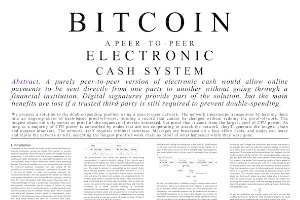
We propose a solution to the double-spending problem using a peer-to-peer network. The network timestamps transactions by hashing them into an ongoing chain of hash-based proof-of-work, forming a record that cannot be changed without redoing the proof-of-work.
Clarke
Total articles: 0
•
2025-06-10 23:38
Records of the Proterozoic Era around the World

Club
Passcard holder privileges: Enter the club, view and participate in the discussion of public posts